
Federal Cannabis Rescheduling Debate & DEA Leadership: What's Really Going On?
Federal Cannabis Rescheduling Debate News Updates
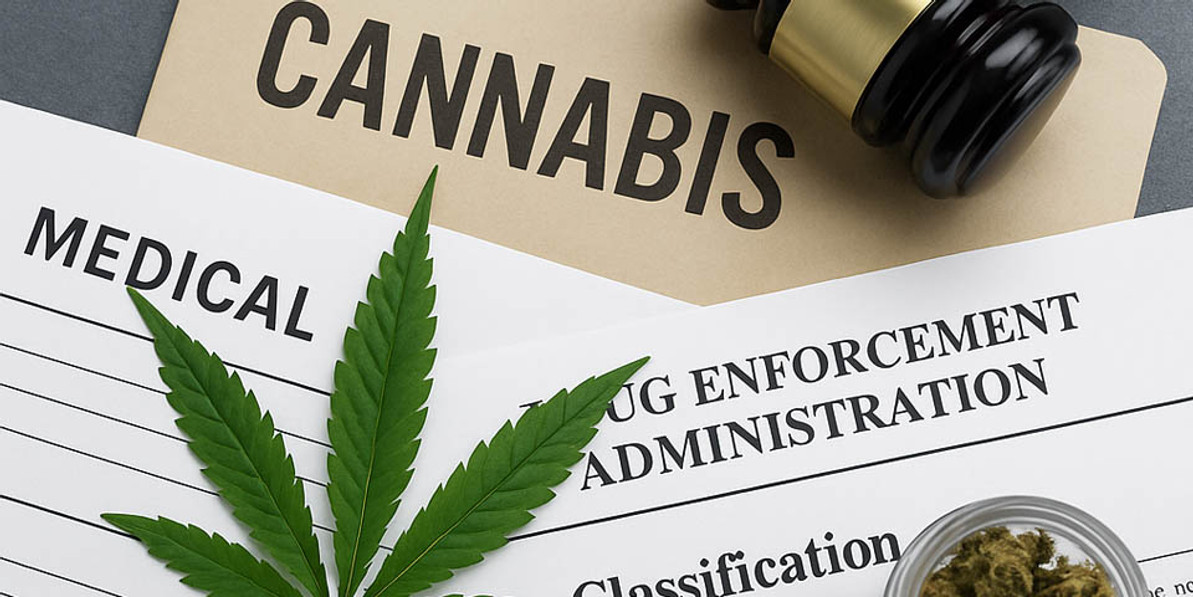
The federal conversation around cannabis is heating up — again. This time, it’s not just activists or state lawmakers pushing for change. The Drug Enforcement Administration (DEA) is now at the center of the storm, facing pressure to reschedule cannabis at the federal level for the first time in decades.
But what does this really mean? Who’s pushing back? And how is DEA leadership influencing the outcome?
What Is Cannabis Rescheduling?
Currently, cannabis is classified as a Schedule I drug, the most restrictive category under the Controlled Substances Act (CSA). This puts it on par with substances like heroin and LSD — despite being legal in some form in 39 states.
Rescheduling would mean moving cannabis to a less-restrictive category (such as Schedule III), recognizing its accepted medical uses and reducing penalties for possession, research restrictions, and tax burdens on businesses.
In August 2023, the Department of Health and Human Services (HHS) formally recommended to the DEA that cannabis be moved to Schedule III.
DEA’s Role — and Reluctance
The DEA has the final say on whether cannabis will be rescheduled. And here’s where things get complicated.
While HHS handles the medical and scientific analysis, the DEA evaluates abuse potential, public health risks, and international treaties. Under Administrator Anne Milgram, the agency has shown signs of caution — if not resistance.
“There’s growing pressure to align with the administration, but internally, there are still strong voices who view cannabis through a traditional law enforcement lens.” — anonymous DEA official, 2024
This echoes what many in the cannabis community have long feared — entrenched thinking at the DEA could stall or water down reform efforts.
Public & Political Pressure
President Biden has publicly supported the review process, stating:
“Too many lives have been upended because of our failed approach to marijuana. It’s time to right these wrongs.”
But even with White House backing, the DEA operates independently, and Milgram has so far offered little public comment on her agency’s direction.
On message boards like r/weedbiz and r/cannabisindustry, users are voicing mixed feelings.
“It’s classic DEA. They’ll drag it out as long as they can. Schedule III is progress, but we need de-scheduling — not just reclassification.”
“My dispensary is taxed like crazy under 280E. If they don’t reschedule soon, a lot of us are going to fold.”
This highlights a critical tension: rescheduling helps businesses and medical research, but many believe only full legalization or de-scheduling will fix the bigger legal contradictions.
What Happens If Cannabis Is Rescheduled to Schedule III?
If the DEA does move cannabis to Schedule III, here’s what will change:
- Medical research will become easier and more legally supported
- Section 280E tax burdens on cannabis businesses will be removed
- Federal penalties for possession may decrease slightly
- Public perception and policy momentum may accelerate toward legalization
However, adult-use cannabis would still be federally illegal, and many state/federal contradictions would persist.
The Bigger Picture: DEA Leadership vs. Reform Momentum
Anne Milgram’s leadership is a wildcard. She has a background in law enforcement and prosecution but hasn’t taken a public stand either for or against rescheduling.
Critics argue that the DEA’s institutional resistance to cannabis stems from decades of criminalization policy. Others believe federal agencies are slowly aligning with shifting public opinion — more than 70% of Americans support legalization, according to Gallup.
In April 2025, a coalition of medical professionals submitted an open letter urging the DEA to accept HHS’s recommendation without delay.
Takeaway: A Pivotal Moment in U.S. Drug Policy
The current rescheduling debate is more than just a bureaucratic review. It’s a litmus test for how far federal institutions are willing to go in recognizing cannabis as a legitimate medical and economic force.
While the DEA has a long history of maintaining the status quo, public sentiment, economic pressure, and political will are all leaning in one direction.
Will DEA leadership step into the future or cling to the past?
Practical Advice for Businesses & Consumers
- Cannabis business owners: Keep close tabs on DEA announcements. If Schedule III is approved, consult a tax advisor to prepare for the end of 280E.
- Patients & caregivers: A shift to Schedule III could improve access to medical cannabis products in more conservative states.
- Advocates & voters: Continue to apply pressure. The final decision isn’t purely scientific — it’s political.
Final Thought
Regardless of where the DEA lands, the cannabis conversation is moving forward. Rescheduling is a step, not the end. And the public, not the DEA, is increasingly in the driver’s seat.
*These statements have not been evaluated by the United States Food and Drug Administration.
**The beliefs and opinions expressed in this blog are not those of Waterbeds 'n' Stuff.
Want more cannabis education, news, and product tips?
Subscribe to our newsletter or follow us on social media.
Explore More:
Recent Posts
-

The Battle Over Intoxicating Hemp in Ohio: What Happened & What’s Next
Intoxicating Hemp Fight in Ohio Continues (April 2026 Update) The fight over intoxicating hemp in …Apr 09, 2026 -

420 Guide 2026: Best Smoking Accessories, Dab Rigs, Vaporizers & Party Ideas to Celebrate Right
Best Smoking Accessories & Party Ideas to celebrate 420 420 is almost here—don’t wait until invento …Apr 06, 2026 -

What Are Terpenes in Weed? A Complete Guide to Terps, Effects, Flavors and Benefits
What Are Terpenes in Weed? A Complete Guide to Terps, Effects, Flavors and Benefits Updated 2026 …Apr 03, 2026