
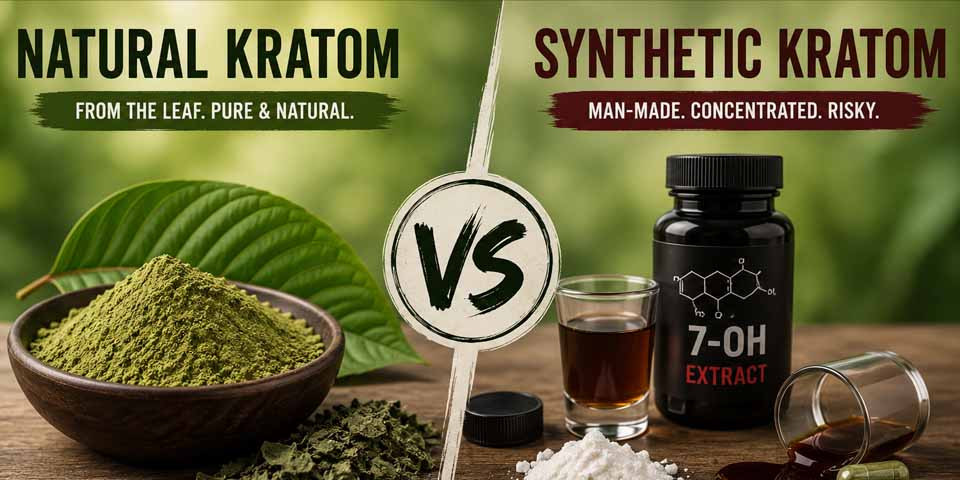
Synthetic Kratom vs Natural Kratom: What’s the Difference and Why States Are Cracking Down in 2026
Synthetic Kratom vs Natural Kratom Explained
If you’ve been following kratom news lately, you’ve probably seen headlines saying:
- “Kratom banned in Ohio”
- “Synthetic kratom crackdown”
- “7-OH products becoming illegal”
But here’s where things get confusing:
Not all kratom products are being treated the same anymore.
In 2026, regulators are increasingly separating:
- Natural kratom leaf
- Synthetic kratom compounds
- Highly concentrated derivatives
And honestly, this distinction is now the center of the entire kratom debate in America.
This guide breaks down exactly what synthetic kratom is, how it differs from natural kratom leaf, why states are targeting certain products, and what consumers should understand moving forward.
• Why Smoke Shops Are Moving Beyond Kratom in 2026
Smoke shops across the country are adapting to changing regulations, evolving customer demand, and growing interest in wellness, nootropics, mushroom products, and alternative categories beyond traditional kratom products.
What Is Natural Kratom?
Natural kratom comes from a tropical tree called Mitragyna speciosa, native to Southeast Asia.
Traditionally, kratom leaves were:
- Chewed fresh
- Dried and crushed
- Brewed into tea
- Ground into powder
For generations, kratom was primarily consumed in simple plant form.
Natural kratom products sold today commonly include:
- Powdered leaf
- Capsules
- Loose leaf tea products
- Traditional crushed leaf
These products are generally much less concentrated than many newer extract-based products now on the market.
What Is Synthetic Kratom?
Synthetic kratom is where things become much more controversial.
Instead of simply using natural leaf material, some modern products contain:
- Highly concentrated alkaloids
- Chemically modified compounds
- Semi-synthetic derivatives
- Potent extract isolates
One of the biggest compounds at the center of this debate is:
7-hydroxymitragynine (7-OH)
This compound naturally exists in kratom in very small amounts, but many newer products contain concentrated or modified forms far beyond traditional plant levels.
That’s one reason regulators became concerned.
Why Are States Targeting Synthetic Kratom?
The rise of highly concentrated products dramatically changed the kratom market.
Regulators and health agencies began raising concerns involving:
- Product potency
- Addiction potential
- Lack of oversight
- Unknown manufacturing standards
- Public safety risks
Many synthetic or concentrated products became widely available in:
- Smoke shops
- Convenience stores
- Gas stations
- Online marketplaces
without major testing or regulatory standards.
This is what triggered many of the recent crackdowns.
Why 7-OH Became the Main Target
7-hydroxymitragynine, commonly called 7-OH, became one of the most controversial compounds in the kratom industry.
Regulators argue that concentrated 7-OH products are significantly more potent than natural kratom leaf.
This led several states—including Ohio—to permanently classify certain 7-OH products and synthetic derivatives as Schedule I controlled substances.
The focus is largely on:
- Concentrated extracts
- Synthetic derivatives
- Modified compounds
rather than traditional natural kratom leaf itself.
Is Natural Kratom Still Legal?
In many states, yes.
As of 2026, natural kratom leaf products remain legal in much of the United States.
However, laws vary significantly by state and even by local jurisdictions.
Some states banned kratom entirely.
Others are moving toward regulation instead of prohibition.
And increasingly, states are distinguishing between:
- Traditional plant products
- Synthetic or concentrated derivatives
What Happened in Ohio?
Ohio became one of the most closely watched states in the country after permanently banning several synthetic kratom compounds in 2026.
The banned compounds include:
- 7-hydroxymitragynine (7-OH)
- Mitragynine pseudoindoxyl
- Dihydro-7-hydroxy mitragynine
- 7-acetoxymitragynine
However, natural kratom sold in vegetation form remains legal in Ohio under current law.
This distinction is critical because many headlines incorrectly suggest all kratom products were banned.
Why This Is Confusing Consumers
Most consumers don’t realize how different many modern kratom products actually are.
To many people, “kratom” sounds like one single category.
But in reality, the market now includes:
- Traditional plant material
- Enhanced extracts
- Highly concentrated isolates
- Synthetic derivatives
And regulators are increasingly treating these categories differently.
What Supporters of Natural Kratom Are Saying
Many kratom advocates argue there’s a major difference between:
- Traditional natural kratom leaf
- Highly concentrated synthetic products
Some supporters believe natural kratom should be regulated similarly to herbal supplements instead of treated like synthetic compounds.
This debate is becoming one of the biggest issues in the industry moving into 2026 and beyond.
Could More States Follow Ohio?
Probably.
Many states are now closely watching:
- Ohio regulations
- FDA pressure
- Public health concerns
- The rise of synthetic derivatives
Experts expect more states to begin separating natural kratom from synthetic kratom compounds in future legislation.
What the Future of Kratom May Look Like
The future of kratom in America may ultimately involve:
- Age restrictions
- Testing requirements
- Product labeling standards
- Concentration limits
- Synthetic derivative bans
rather than blanket prohibition of all natural kratom products.
That appears to be the direction many lawmakers are moving toward.
Final Thoughts: Why the Difference Matters
The biggest takeaway from the entire kratom debate is this:
Natural kratom and synthetic kratom are increasingly being treated as two very different categories.
That distinction is driving nearly every new law, regulation, and crackdown happening right now.
And moving forward, understanding that difference will become more important than ever for consumers, retailers, and lawmakers alike.
Trending Cannabis & Industry Blogs
- Microdosing THC in 2026: Why Low-Dose Edibles Are Taking Over
- Quick Fix Plus 6.4 Review (2026): What Buyers Should Know
- Quick Fix Plus vs Competitors (2026 Comparison Guide)
- Quartz Bangers: Types, Differences & Performance Explained
- Top 7 Functional Mushrooms and Their Benefits: Lion’s Mane, Reishi, Cordyceps and More
- Top 10 Smoking Accessories Every Smoker Should Own In 2026
Shop Our Online Headshop For Smoking Essentials and Tons More!
Want more cannabis education, news, and product tips?
Subscribe to our newsletter or follow us on social media.
Facebook
Instagram
Twitter X
Pinterest
Explore More:
Recent Posts
-

Why Is Weed So Much More Expensive in Ohio Than Michigan?
Why Is Weed So Much More Expensive in Ohio Than Michigan? 2026 Price Comparison Published October …Oct 23, 2026 -

Is THCA Flower About to Become Illegal? November vs. December 2026 Explained
Last updated: October 20, 2026 THCA flower has become one of the most controversial products in the …Oct 21, 2026 -

Will Congress Save Hemp THC Before December 11, 2026? What Happens to Delta-8, THCA, CBD & THC Drinks
Updated October 19, 2026 The clock is ticking for America's hemp-derived THC industry. After years …Oct 20, 2026