

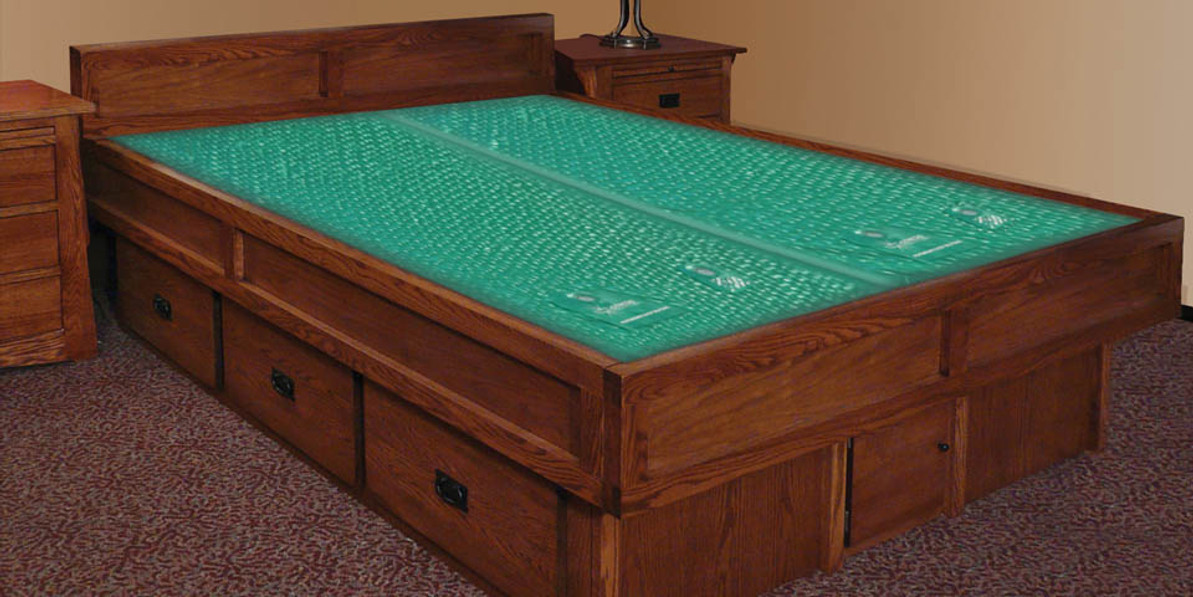
Waterbeds: Their History, Who Created Them, When They Were Selling, and Do People Still Buy Them?
The interesting history and curriosity of waterbeds—not only because of their ripple-filled novelty, but also their curious journey through mattress history. Let’s take a deep dive into where they came from, who really invented them, their heyday, and whether anyone still uses them today.
1. Ancient Origins to 19th-Century Medical Beds
Believe it or not, the concept of sleeping on water goes back thousands of years. Ancient Persians are said to have filled goatskins with warm water to craft primitive waterbeds for the elderly or royalty. Fast forward to 1833: Scottish physician Dr. Neil Arnott designed what’s often considered the first Western waterbed. Known as the “Hydrostatic Bed,” it was intended to help prevent bedsore development in bedridden patients and consisted of a water bath topped with rubber-coated canvas. Arnott didn't patent it, allowing anyone to replicate it freely.
2. The Modern Waterbed: A Sixties Invention
The waterbed as we know it—the vinyl mattress you fill with water—came about in the late 1960s thanks to design student Charles (Charlie) Hall at San Francisco State University. It began life as his master’s thesis project. He even experimented with chairs filled with Jell-O and cornstarch before discovering water's ideal qualities. His bed innovation relied on displacement—water contouring to the body’s shape. Hall’s design was patented in 1971, incorporating water heating and a sturdy frame to manage expansion.
3. When Waterbeds Ruled: The 1970s to 1990s Boom
Waterbeds took off spectacularly in the 1970s and ’80s, claimed as the coolest, most sensuous beds you could own. In the U.S., they made up around 12–15% of mattress sales at their peak, with annual industry revenue hitting close to $2 billion.
Their popularity wasn’t just about comfort; it was about culture. Iconic ads like “Two things are better on a waterbed” made them staples of counterculture chic. Yet, practical issues began to surface—weight, leaks, maintenance costs—and the rise of memory foam and adjustable beds in the early 1990s dealt a further blow to their mass appeal.
4. Do People Still Buy Waterbeds?
The short answer: yes, but in much smaller numbers. Waterbeds never fully vanished. In fact, forums and recent reports show a dedicated niche of longtime users who swear by them.
“Water beds are certainly alive and kicking today... My wife and I had been sleeping in a waterbed for over 40 years... we find that we don’t sleep anywhere near as well on anything other than water.”
But there’s no denying that many have moved on. Reddit users frequently comment things like “It’s something I almost never see anymore,” pointing to how rare they feel today.
5. What Modern Users Love—and What They Complain About
Here’s a look at real perspectives from forums and firsthand stories:
- Enveloping comfort: Many appreciate how waterbeds alleviate pressure points and adapt to your body.
- Temperature control: Users often mention how warm they feel in winter and cool in summer.
- Low allergen environment: Vinyl surfaces don’t harbor dust mites like some foam mattresses can.
“We’ve had a waterbed for over 30 years... add water when needed… maintenance is minimal, and no allergy issues.”
On tougher notes, people frequently complain about:
- The challenge of moving or draining a fully water-filled bed—especially with bulky pumps.
- Occasional leaks, too much wave motion, and strict regulations about waterbeds in apartment leases.
- Ongoing maintenance—heating, burping, and occasional chemical use can be high effort.
Practical Takeaways
- If you love enveloping support and don’t mind a bit of upkeep, a modern waveless waterbed could still feel wonderfully restorative.
- Living in an apartment or planning to move soon? Be sure you can drain and move it efficiently—or reconsider.
- Allergy-prone sleepers may benefit from the vinyl surface, which is less hospitable to dust mites than many foam models.
- If warmth matters to you, the heat control feature common in waterbeds can be a cozy perk.
To wrap up: waterbeds have enjoyed centuries of quiet evolution, exploded into mainstream allure, then faded—but never truly disappeared. They’re cherished by a loyal few and remembered fondly by many.
Waterbeds can be purchased at Waterbeds N Stuff store locations or ordered online at our sister site www.bedsnstuff.com.
Want more cannabis education, news, and product tips?
Subscribe to our newsletter or follow us on social media.
Explore More:
Recent Posts
-

Top 10 Smoking Accessories Every Smoker Should Own
Smoking Accessories You Need Whether you're a casual smoker or a seasoned enthusiast, the right smo …Mar 10, 2026 -

The 2026 Ultimate Head Shop Gift Guide: What to Buy for Every Type of Smoker
Shop Gifts for Every Type of Marijuana Smoker Shopping for the perfect gift for someone who enjoys …Mar 07, 2026 -

Top 7 Functional Mushrooms and Their Benefits: Lion’s Mane, Reishi, Cordyceps and More
Functional Mushrooms Have Become Mainstream Functional mushrooms have rapidly become one of the fas …Mar 04, 2026