
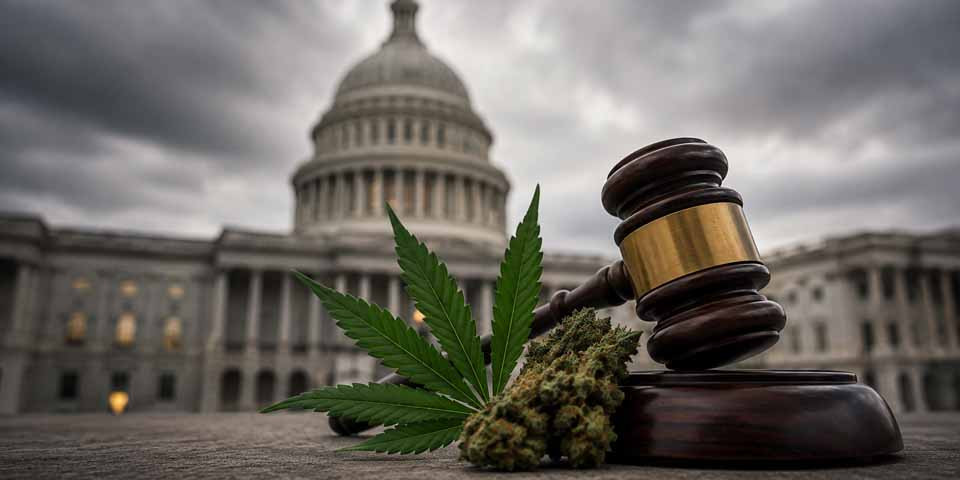
35 Attorneys General Want Congress to Keep the Hemp THC Ban — Here’s What They’re Asking For
Is A Hemp THC Ban Coming?
Updated August 2026: The fight over America's hemp industry just became even more politically complicated.
A bipartisan coalition of 35 attorneys general representing 34 states and one U.S. territory is urging congressional leaders not to back away from the sweeping federal restrictions on intoxicating hemp products scheduled to begin later this year.
Their message to Congress is essentially this:
Don't delay the crackdown. Don't reopen the loophole. Let the new hemp restrictions take effect.
The attorneys general argue that the federal definition of hemp created by the 2018 Farm Bill unintentionally allowed an enormous intoxicating cannabinoid industry to develop outside traditional state marijuana systems.
They're pointing specifically to products such as:
- Delta-8 THC
- Delta-10 THC
- THCA products
- Hemp-derived intoxicating cannabinoids
- THC gummies and edibles
- Some hemp THC beverages
- Synthetic or chemically converted cannabinoids
The attorneys general say these products have frequently been sold without consistent national age restrictions, testing standards, packaging requirements or other regulations that normally apply to marijuana.
But hemp businesses, consumers and even the White House are pushing Congress in another direction.
Instead of allowing an extremely broad federal ban to take effect, they want lawmakers to consider something very different:
Regulate intoxicating hemp instead of eliminating most of the market.
That disagreement has now created an unusual political battle involving state attorneys general, Congress, the White House, hemp farmers, marijuana companies, beverage manufacturers, CBD companies, smoke shops and millions of consumers.
And the clock is running.
What Did the 35 Attorneys General Actually Ask Congress to Do?
The coalition wants Congress to preserve the new federal restrictions enacted in 2025 rather than delay or substantially weaken them before implementation.
The attorneys general argue that states have spent years attempting to control an intoxicating-hemp marketplace that expanded rapidly after passage of the 2018 Farm Bill.
According to their position, Congress finally addressed that problem when it enacted a substantially narrower definition of hemp.
Now they don't want Congress to reverse course just before those rules take effect.
Their request comes at an especially important moment because the Senate has just approved legislation that could temporarily postpone much of the federal hemp crackdown.
In other words:
the attorneys general are asking Congress to stay the course while other powerful groups are asking Congress to reconsider.
The existing federal law is scheduled to change the definition of hemp on November 12, 2026. The Senate has now approved a temporary extension that could move much of the crackdown to December 11, 2026.
Read Our Latest Federal Hemp & THCA Coverage
This Isn't the First Time Attorneys General Have Pressured Congress Over Hemp THC
The current letter is part of a much longer campaign by state attorneys general.
In October 2025, a bipartisan coalition of 39 state and territorial attorneys general urged Congress to change the federal definition of hemp.
That earlier coalition argued that businesses were exploiting what the attorneys general described as a loophole created by the 2018 Farm Bill.
The attorneys general specifically highlighted products involving cannabinoids such as Delta-8, Delta-10 and THC-O and argued that intoxicating products were being sold in convenience stores, gas stations and online without uniform safeguards.
Congress subsequently enacted a much stricter federal hemp definition.
So from the attorneys generals' perspective, Congress already responded to their concerns.
The current fight is largely about whether Congress should now postpone or rewrite that solution.
Why Did the 2018 Farm Bill Create This Problem?
The 2018 Farm Bill federally legalized hemp by separating qualifying hemp from marijuana under federal controlled-substance law.
The key number became:
0.3% delta-9 THC on a dry-weight basis.
At the time, CBD was the cannabinoid receiving most of the attention.
Few consumers had ever heard of:
- Delta-8 THC
- THCA flower
- HHC
- Delta-10
- Hemp-derived Delta-9 gummies
- Hemp THC seltzers
But businesses quickly discovered that the statutory definition created opportunities Congress may not have anticipated.
A nationwide cannabinoid market developed.
How Did Delta-8 Become Legal Hemp?
Delta-8 THC became one of the earliest major examples.
The cannabis plant naturally produces relatively small amounts of Delta-8.
Commercial manufacturers discovered they could take federally legal hemp-derived CBD and chemically convert it into Delta-8 THC.
The resulting products could produce intoxicating effects.
Yet manufacturers argued they remained lawful hemp derivatives because they originated from federally legal hemp.
That created an entirely new market almost overnight.
Then THCA Flower Changed the Hemp Market Again
THCA presented a different legal and scientific issue.
Unlike commercially converted Delta-8, THCA occurs naturally and abundantly in cannabis.
THCA is tetrahydrocannabinolic acid.
It is the chemical precursor to delta-9 THC.
When THCA is heated through smoking or vaporization, it undergoes decarboxylation and converts into delta-9 THC.
That meant cannabis flower could contain:
- Less than 0.3% delta-9 THC
- But 15%, 20%, 25% or more THCA
and still be marketed under interpretations of the federal hemp definition.
When smoked, however, that THCA converts into intoxicating THC.
This created what became known as the THCA loophole.
Shop Glass Bongs & Water Pipes
Browse glass bongs, water pipes, percolators and unique smoking accessories from Waterbeds 'n' Stuff. Find everyday glass pieces and distinctive designs from popular brands.
Shop Bongs & Water PipesWhat Are the Attorneys General Worried About?
Their argument isn't simply that hemp products can get people high.
The attorneys general have repeatedly focused on several specific public-safety concerns.
1. Children Can Access Some Products Too Easily
One of their biggest arguments is that intoxicating hemp products have sometimes been sold in ordinary retail locations without consistent 21+ requirements.
Depending on the state, products have appeared in:
- Gas stations
- Convenience stores
- Smoke shops
- CBD stores
- Online stores
Unlike alcohol or state-regulated marijuana, there has never been one comprehensive national retail system governing every intoxicating hemp product.
2. Packaging Can Look Like Candy or Snacks
Attorneys general have repeatedly criticized hemp THC products packaged in ways they believe could appeal to children.
Products resembling:
- Candy
- Gummies
- Soda
- Snack foods
- Popular consumer brands
have attracted particular scrutiny.
This is one area where even many hemp-industry advocates agree regulation is appropriate.
There is a significant difference between an adult product clearly labeled as containing THC and a package intentionally designed to resemble children's candy.
3. Potency Can Be Inconsistent
The attorneys general also point to inconsistent potency and manufacturing standards.
A regulated marijuana product normally undergoes testing required by the state cannabis program.
The hemp marketplace varies much more widely.
Some reputable hemp companies use independent laboratories, publish certificates of analysis and follow strict manufacturing standards.
Others may not.
That inconsistency is one of the strongest arguments for national product standards.
4. Chemically Converted Cannabinoids Raise Additional Questions
Delta-8 illustrates another concern.
Commercial Delta-8 is commonly created by chemically converting CBD.
The conversion process itself isn't automatically proof that a product is dangerous.
But poorly controlled chemistry can potentially leave unwanted reaction byproducts, residual solvents or other contaminants.
That makes laboratory testing and manufacturing standards especially important.
Are the Attorneys General Asking Only for Better Regulation?
This is where the controversy becomes important.
The federal law they're asking Congress to preserve goes much further than simply requiring:
- Age 21+
- Testing
- Accurate labels
- Child-resistant packaging
- Manufacturing standards
Instead, the new definition could remove huge portions of the existing hemp cannabinoid market from the federal definition of legal hemp entirely.
That's why hemp businesses describe the legislation as a ban rather than ordinary regulation.
What Does the New Federal Law Actually Do?
The federal legislation enacted in November 2025 makes several enormous changes.
One of the most important changes is how THC is calculated.
The 2018 standard focused heavily on:
Delta-9 THC.
The replacement standard uses:
Total THC, specifically including THCA.
That closes much of the legal pathway currently used for high-THCA flower.
The 0.3% Total-THC Rule Could End Most THCA Hemp Flower
Consider cannabis containing:
- 0.20% delta-9 THC
- 22% THCA
Under an interpretation focused on existing delta-9 THC, the 0.20% number falls below 0.3%.
But total potential THC looks completely different.
A commonly used calculation is:
Total THC = delta-9 THC + (THCA × 0.877)
In this example:
22 × 0.877 = approximately 19.29%
Add the existing delta-9 THC:
approximately 19.49% total THC.
That's obviously nowhere near the new 0.3% total-THC limit.
There's Also a 0.4 Milligram Finished-Product Limit
This is potentially even more disruptive for other parts of the hemp industry.
The new federal framework excludes certain finished hemp-derived cannabinoid products containing more than approximately:
0.4 milligrams of combined total THC and related cannabinoids per container.
Notice the wording:
per container.
Not per serving.
That distinction matters enormously.
Why 0.4 Milligrams Is Such a Tiny Amount
A typical intoxicating hemp gummy might contain several milligrams of THC in a single serving.
A THC beverage might contain 2.5 mg, 5 mg or more.
Those products would obviously exceed a 0.4 mg container threshold.
But the impact could reach farther.
Some full-spectrum CBD products intentionally contain tiny trace quantities of naturally occurring THC.
Even if one serving contains very little THC, the entire bottle can contain more than 0.4 mg.
That's why CBD companies argue that a law supposedly aimed at intoxicating products could affect products that are not meaningfully intoxicating at all.
The new federal definition specifically counts THCA toward total THC. That creates a major problem for high-THCA flower once the new rules take effect.
Read: Is THCA About to Become Illegal Federally? What Happens in November/December 2026
Why November 12, 2026 Matters
The revised federal hemp definition was enacted on November 12, 2025 with a one-year implementation period.
That makes the currently enacted effective date:
November 12, 2026.
If nothing changes before then, the stricter federal hemp definition is scheduled to take effect.
That is exactly what the attorneys general want Congress to allow to happen.
But the Senate Just Voted to Delay the Crackdown
This is what makes the attorneys generals' letter especially timely.
Senate leaders included a provision in a government funding measure that would temporarily postpone much of the new hemp restriction until:
December 11, 2026.
Senators Ted Budd of North Carolina and Pete Ricketts of Nebraska supported removing that extension and keeping the restrictions on their earlier schedule.
But the Senate voted 61-32 to table Budd's amendment.
The broader funding legislation subsequently passed the Senate 90-6.
So despite pressure from the attorneys general, the Senate has—for now—chosen to preserve a short delay.
:contentReference[oaicite:0]{index=0}Important: The Hemp Ban Has NOT Been Permanently Repealed
This distinction is essential.
The Senate did not vote to permanently restore the 2018 Farm Bill hemp marketplace.
It voted for a temporary extension.
If the extension completes the legislative process, Congress would gain approximately another month to negotiate.
Without another change, the underlying restrictions would still arrive in December.
The White House Is Actually Pushing in the Other Direction
This makes the political situation even more unusual.
The White House has asked Congress to reconsider the new hemp definition and provide additional time to develop a fairer regulatory framework.
So there are now powerful government actors on opposite sides:
35 attorneys general: Don't delay the crackdown.
White House: Give Congress additional time and reconsider the framework.
Hemp industry: Regulate rather than broadly prohibit.
Some state marijuana interests: Close the hemp loophole and move intoxicating cannabis into regulated channels.
Consumers: Increasingly asking whether products they've legally purchased for years are about to disappear.
:contentReference[oaicite:1]{index=1}Why Would Attorneys General Prefer a Federal Ban?
One practical reason is that a national rule makes state enforcement easier.
Right now states have created a patchwork of laws.
A product might be:
- Legal in one state
- Age-restricted in another
- Limited by potency elsewhere
- Restricted to dispensaries in another
- Completely prohibited somewhere else
Online interstate sales complicate enforcement further.
A strong federal definition gives state authorities a common baseline.
There's Also a Law-Enforcement Problem With Hemp Flower
THCA flower creates a particularly difficult enforcement issue.
Visually, high-THCA hemp flower can look virtually identical to marijuana.
It can:
- Look the same
- Smell the same
- Contain similar terpenes
- Contain similar THCA concentrations
- Produce similar effects when smoked
The legal distinction may depend on laboratory cannabinoid testing.
For police and prosecutors, that complicates marijuana enforcement.
But There's Another Side to the Argument
The attorneys generals' public-safety concerns deserve serious consideration.
But critics argue that those concerns support regulation, not necessarily prohibition.
If the problems are:
- Minors purchasing products
- Poor labeling
- Inadequate testing
- Unsafe packaging
- Unknown potency
then those problems can potentially be addressed directly.
Congress could require:
- 21+ sales nationwide
- Mandatory third-party testing
- Accurate cannabinoid labeling
- Child-resistant packaging
- Contaminant testing
- Good manufacturing practices
- Retail licensing
- Advertising restrictions
- Taxes
That is essentially the alternative hemp advocates are asking Congress to consider.
There's an Important Scientific Difference Between THCA and Converted Delta-8
Lumping every product together under the phrase "intoxicating hemp" can obscure important chemistry.
THCA is naturally produced by cannabis.
Commercial Delta-8 THC, by contrast, is frequently produced by chemically converting CBD because cannabis naturally contains only small quantities of Delta-8.
That doesn't automatically mean one category is safe and another dangerous.
But they raise different manufacturing and regulatory questions.
THCA flower primarily raises questions about cannabis classification and total THC.
Converted cannabinoids raise additional questions about manufacturing chemistry and reaction byproducts.
A sophisticated regulatory system could theoretically treat those categories differently.
Explore Vaporizers
Browse portable vaporizers, concentrate devices and electronic smoking accessories from leading brands at Waterbeds 'n' Stuff.
Shop VaporizersWhat Are People Saying on Reddit?
The reaction in cannabis and hemp communities has been overwhelmingly skeptical of the attorneys generals' position.
A Reddit discussion about the 35-AG letter quickly accumulated hundreds of votes and dozens of comments.
Some commenters questioned why lawmakers would choose prohibition instead of establishing a regulated adult marketplace.
Others argued that state governments should focus on preventing sales to minors and requiring product testing rather than eliminating access for adults.
Another recurring theme was frustration over the difference between alcohol and cannabis regulation.
Users questioned why alcohol can remain widely available under a regulated system while hemp THC products are treated as requiring prohibition.
Those are opinions—not evidence that the attorneys generals' safety concerns are false—but they illustrate the political problem lawmakers face.
Many consumers don't see the choice as:
"unregulated hemp or prohibition."
They see a third option:
regulated adult access.
:contentReference[oaicite:2]{index=2}CBD Users Are Worried Too
Another Reddit discussion among CBD consumers highlights a different concern.
Some users initially described the upcoming law as a "CBD ban."
Others correctly pointed out that the legislation is primarily aimed at hemp-derived THC and intoxicating cannabinoid products.
But the concern isn't completely unfounded.
The extremely low finished-product THC threshold could affect some full-spectrum CBD products containing naturally occurring trace THC.
That is why companies selling traditional CBD products are participating in the federal policy debate even if they don't sell Delta-8 or high-THCA flower. :contentReference[oaicite:3]{index=3}
The Hemp Industry Says It Supports Regulation
One important detail often lost in the debate is that major hemp advocates aren't necessarily asking Congress for a completely unrestricted marketplace.
Industry representatives have publicly supported measures such as:
- Keeping intoxicating products away from minors
- 21+ restrictions
- Child-resistant packaging
- Good manufacturing practices
- Product testing
- Restrictions on unsafe synthetic products
The disagreement is largely about whether Congress should regulate legitimate adult products or define them out of the hemp market entirely.
Could THC Drinks Get Saved While THCA and Delta-8 Don't?
Yes.
In fact, this is one of the most interesting possibilities developing in Congress.
Lawmakers have discussed creating a regulated federal pathway for low-dose hemp THC beverages.
A potential model could include:
- 21+ sales
- 5 mg THC serving limits
- Federal taxation
- Clear labeling
- Regulated distribution
That could result in a future where:
THC beverages survive under regulation.
High-THCA flower loses hemp status.
Converted Delta-8 faces tighter restrictions.
CBD receives its own separate rules.
In other words, today's single "hemp cannabinoid" market could eventually split into several regulatory categories.
Would That Make More Scientific Sense?
Potentially.
Products with very different chemistry, potency and methods of use don't necessarily create identical risks.
A 5 mg beverage is not the same product as:
- 25% THCA flower
- A concentrated vape cartridge
- A high-dose edible
- A converted cannabinoid
- A non-intoxicating CBD tincture
A regulatory system based on actual product characteristics could theoretically distinguish between them.
The current federal framework is much broader.
What Does This Mean for Ohio?
Ohio is already living through a version of this fight.
Senate Bill 56 created much stricter rules for intoxicating hemp and broadened Ohio's THC definitions.
The law affects products such as:
- THCA
- Delta-8
- THC gummies
- THC beverages
- Other intoxicating hemp products
But portions of Ohio's hemp restrictions are now involved in federal litigation.
A federal judge has temporarily blocked enforcement of specific provisions against named hemp companies and those acting with them.
Importantly, that ruling did not simply erase SB 56 or declare every hemp THC product legal everywhere in Ohio. :contentReference[oaicite:4]{index=4}
Ohio moved ahead of the federal government with its own total-THC restrictions. Hemp companies sued, and a federal judge temporarily blocked enforcement of specific provisions against protected businesses.
Read: Can Ohio Stores Sell CBD and Hemp THC Products Again? The SB 56 Court Battle Explained
Ohio's Attorney General Has Been Involved in the Broader Hemp Debate
Ohio's attorney general has participated in previous multistate efforts concerning intoxicating hemp.
That makes this federal debate particularly relevant for Ohio retailers.
State officials aren't simply waiting for Congress to determine policy.
Ohio has already moved toward a system that treats many intoxicating hemp products more like marijuana.
If the federal government ultimately adopts a similar approach, Ohio's system could become much closer to the national baseline.
Ohio marijuana is legal for adults, but that doesn't mean every cannabis-derived product follows the same rules. THCA, Delta-8, CBD and hemp THC can fall into different legal categories.
Read Our Ohio Marijuana, CBD, Delta-8 & Hemp Law Guide
Why Licensed Marijuana Companies Care About This
There is another major player in the debate: state-licensed marijuana businesses.
Licensed cannabis companies can face substantial costs involving:
- State licensing
- Seed-to-sale tracking
- Security
- Testing
- Packaging
- Local zoning
- Cannabis taxes
- Advertising restrictions
Meanwhile, hemp-derived intoxicating products have often been sold through ordinary retail channels.
From the marijuana industry's perspective, that can look like two businesses selling products with similar effects under dramatically different rules.
Closing the hemp loophole could push more intoxicating cannabis sales into licensed marijuana dispensaries.
But Consumers May Have Fewer Choices
The flip side is accessibility.
THCA, Delta-8 and hemp THC products became popular partly because consumers could purchase them outside state marijuana systems.
Consumers in states without recreational marijuana particularly benefited from interstate hemp commerce.
If those products disappear federally, some consumers won't simply switch to dispensaries.
They don't have recreational dispensaries.
Could Prohibition Push Consumers Back to Unregulated Markets?
This is one of the strongest arguments against a broad ban.
Legal markets can require:
- Testing
- Ingredient disclosure
- Potency labels
- Age verification
- Traceable businesses
If consumers continue wanting intoxicating cannabis after legal hemp products disappear, some demand could migrate to illegal markets.
That doesn't mean every regulation increases illicit sales.
But policymakers have to consider whether prohibition actually eliminates demand or simply changes where consumers buy products.
Shop Rolling Papers, Cones & Accessories
Browse rolling papers, cones, wraps and rolling accessories from Waterbeds 'n' Stuff, with classic favorites and specialty options for every setup.
Shop Rolling PapersWhat Could Congress Do Instead of a Broad Ban?
Congress has several options.
Option 1: Let the Existing Restrictions Take Effect
This is closest to what the attorneys general are requesting.
The new hemp definition would sharply reduce the intoxicating-hemp market.
Option 2: Delay the Restrictions
The Senate has already moved toward this approach with its proposed December 11 extension.
The goal would be giving lawmakers additional time to create a replacement system.
Option 3: Create a National 21+ Hemp THC Market
Congress could regulate intoxicating hemp similarly to alcohol.
Products could remain legal while requiring:
- Age verification
- Licensing
- Testing
- Taxes
- Packaging standards
- Potency limits
Option 4: Separate Different Cannabinoid Categories
Congress could distinguish between:
- Natural THCA
- Converted Delta-8
- Synthetic cannabinoids
- Low-dose hemp THC drinks
- CBD
- Industrial hemp
This would create a much more complicated regulatory framework, but it could avoid treating fundamentally different products identically.
Option 5: Move Intoxicating Hemp Into State Marijuana Programs
Congress could effectively decide that cannabis capable of producing meaningful intoxication belongs in regulated marijuana systems rather than the hemp marketplace.
This would largely preserve traditional industrial hemp and CBD while ending the national hemp THC market.
What Happens Next?
The next step is congressional action.
The Senate has supported a short extension despite the attorneys generals' request to keep the crackdown on schedule.
The House still matters.
And even if the extension becomes law, the fundamental disagreement remains unresolved.
Congress still has to decide:
Is intoxicating hemp going to be banned, regulated or divided into entirely new product categories?
Frequently Asked Questions
Did 35 attorneys general ask Congress to keep the hemp THC ban?
Yes. A bipartisan coalition representing 34 states and one U.S. territory urged congressional leaders not to delay or weaken the forthcoming federal restrictions on intoxicating hemp products.
Why do the attorneys general support the restrictions?
They cite concerns involving youth access, inconsistent age restrictions, product potency, misleading packaging, inadequate testing and the growth of intoxicating cannabinoid products outside regulated marijuana systems.
Are they trying to ban THCA?
The federal restrictions they support would count THCA toward the total-THC limit used to define hemp. Most high-THCA flower would therefore have difficulty qualifying as legal hemp.
Are they trying to ban Delta-8?
Converted cannabinoids such as commercial Delta-8 are among the major product categories targeted by the federal changes.
When is the federal hemp law scheduled to change?
The currently enacted effective date is November 12, 2026.
Why is December 11 being discussed?
The Senate has approved a temporary extension that could postpone much of the federal hemp crackdown until December 11, 2026.
Did the Senate ignore the attorneys generals' request?
The Senate has so far chosen to preserve a short delay. An amendment aimed at stripping the extension was tabled 61-32, and the broader funding legislation passed 90-6. :contentReference[oaicite:5]{index=5}
Does the White House support the ban?
The White House has urged Congress to revise the hemp framework and provide additional time rather than simply allowing the existing restrictions to take effect unchanged. :contentReference[oaicite:6]{index=6}
Does the hemp industry oppose all regulation?
No. Major hemp advocates have supported age restrictions, child-resistant packaging, testing, manufacturing standards and other safeguards while arguing against broad prohibition.
Will regular CBD become illegal?
CBD itself isn't simply being declared illegal. However, some full-spectrum CBD products containing trace THC could have difficulty meeting extremely low finished-product THC thresholds.
Will THC beverages be banned?
Many existing hemp THC beverages would exceed the forthcoming finished-product limits. However, lawmakers are discussing alternative regulatory frameworks that could potentially preserve certain low-dose adult beverages.
What happens to THCA flower?
Most high-THCA flower would exceed a 0.3% total-THC standard because the calculation specifically includes THCA.
Will marijuana dispensaries be affected?
The hemp definition primarily determines which cannabis products qualify as hemp. State-licensed marijuana already operates under a different legal framework.
Is this a Republican or Democratic effort?
No. The attorneys-general campaigns concerning intoxicating hemp have been bipartisan, involving chief legal officers from states governed by both political parties.
Could Congress regulate hemp THC instead?
Yes. Congress could create a national framework involving age restrictions, testing, potency limits, manufacturing standards, licensing and taxation. Whether lawmakers ultimately choose that approach remains unresolved.
The Bigger Issue: Regulation vs. Prohibition
The attorneys general have legitimate questions for Congress.
Should a teenager be able to purchase an intoxicating THC gummy from a gas station?
Should manufacturers be allowed to sell cannabinoid products without reliable potency testing?
Should THC candy use packaging designed to attract children?
Should chemically converted cannabinoids be manufactured without meaningful contaminant standards?
Those are serious regulatory issues.
But there's another question Congress must answer:
Do those problems require eliminating the products—or regulating them properly?
Alcohol provides an obvious comparison.
Alcohol can be dangerous.
Children cannot legally buy it.
Manufacturers face rules.
Retailers need licenses.
Products have standardized labels.
States regulate distribution.
But alcohol wasn't prohibited nationally because regulation was necessary.
Hemp advocates increasingly argue that adult THC products deserve a similarly mature regulatory discussion.
Final Takeaway: The 35 Attorneys General Want Congress to Hold the Line
The message from the attorneys general is clear.
They believe the intoxicating-hemp market created after the 2018 Farm Bill has become a public-safety problem and that Congress already took the necessary step by rewriting the federal hemp definition.
They don't want lawmakers to reverse course.
But Washington is clearly not united.
The Senate has supported temporarily delaying much of the crackdown.
The White House has asked Congress to reconsider the framework.
Hemp businesses are pushing for regulation instead of prohibition.
CBD companies fear unintended consequences.
THCA businesses face losing the federal definition that made their national market possible.
State marijuana businesses want comparable products subjected to comparable regulation.
And consumers increasingly want to know why adults can't simply purchase properly tested hemp THC products under a regulated 21+ system.
That makes the debate much larger than Delta-8, THCA or THC drinks.
Congress is deciding what the word "hemp" will mean for the next generation of the American cannabis industry.
The attorneys general want that definition narrowed dramatically.
The Senate has bought the industry a little more time.
Now the real question is what Congress does with it.
This article is provided for informational purposes only and does not constitute legal or medical advice. Hemp and cannabis laws change rapidly and vary by jurisdiction.
You May Also Like
- Ohio's Cannabis Cartel? Inside the Attorney General's Lawsuit Against Nine Major Weed Companies
- Why More Cannabis Users Are Ignoring THC Percentage in 2026
- Cold Start Dabs Explained
- Best Dab Temps for Flavor vs Clouds
Looking for premium smoking accessories, dab tools, quartz bangers, vaporizers, and more? Browse our full selection online or visit one of our Ohio locations.
Shop Our Online Headshop For Smoking Essentials and Tons More!
Want more cannabis education, news, and product tips?
Subscribe to our newsletter or follow us on social media.
Recent Posts
-
New Ohio Weed Laws 2026: What Marijuana Buyers Need to Know After the October Changes
OHIO WEED LAWS CHANGE Updated October 7, 2026 Ohio's marijuana laws changed again. And judging fro …Oct 06, 2026 -
Why Does My Dab Rig Clog So Fast? How Reclaim Builds Up & How to Reduce It
You cleaned your dab rig. The glass looked perfect. The water was fresh. The percolator was comple …Sep 22, 2026 -

Why Concentrates Confuse So Many People: Wax vs Shatter vs Badder vs Rosin vs Resin
You walk up to a concentrate display and see: Wax Shatter Badder Budder Rosin Live rosin Resin Li …Sep 17, 2026