
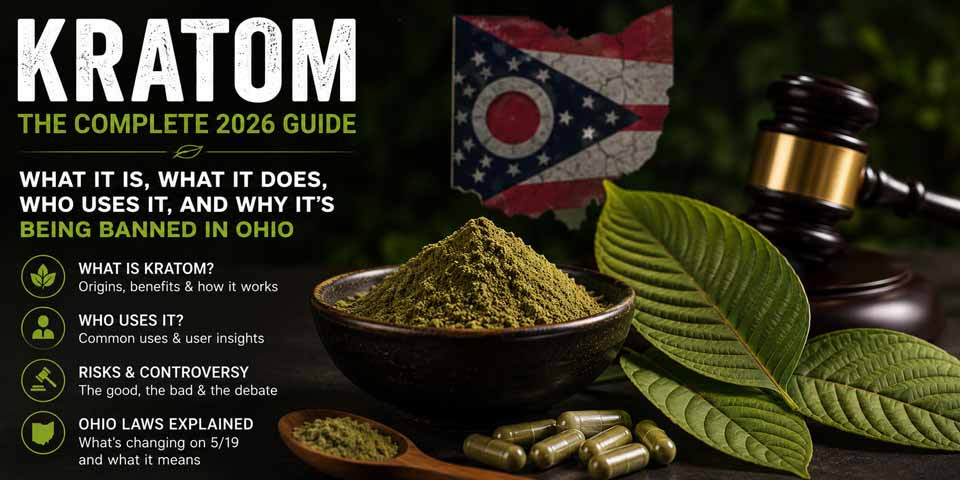
Ohio Kratom Laws Explained (2026): Synthetic Kratom Ban vs Natural Kratom Leaf
Kratom Ban In Ohio
There’s been massive confusion surrounding kratom in Ohio lately. Some people believe kratom is completely banned. Others think nothing has changed at all. The reality is much more complicated.
As of 2026, Ohio has permanently banned several synthetic kratom compounds and highly concentrated derivatives—but natural kratom leaf remains legal under certain conditions.
This distinction is extremely important for:
- Consumers
- Smoke shops
- Retail stores
- Kratom vendors
And honestly, this distinction is the center of the entire kratom debate right now.
This guide breaks down:
- What Ohio actually banned
- What remains legal
- Why regulators targeted synthetic kratom products
- What could happen next
Because right now, most people are only hearing part of the story.
• Why Smoke Shops Are Moving Beyond Kratom in 2026
Smoke shops across the country are adapting to changing regulations, evolving customer demand, and growing interest in wellness, nootropics, mushroom products, and alternative categories beyond traditional kratom products.
What Is Kratom?
Kratom comes from a tropical tree called Mitragyna speciosa, native to Southeast Asia.Traditionally, kratom leaves were used by laborers and communities in countries like Thailand and Indonesia for energy, endurance, and relaxation.
In the United States, kratom products are commonly sold as:
- Powders
- Capsules
- Tea products
- Extracts
- Concentrated shots
People use kratom for a wide variety of reasons, including:
- Energy and focus
- Relaxation
- Mood support
- Pain management
However, the kratom industry changed dramatically once highly concentrated synthetic derivatives entered the market.
What Ohio Actually Banned
Ohio did not completely ban all kratom products. Instead, the state permanently classified several synthetic kratom compounds and concentrated derivatives as Schedule I controlled substances.
The banned compounds include:
- 7-hydroxymitragynine (7-OH)
- Mitragynine pseudoindoxyl
- Dihydro-7-hydroxy mitragynine
- 7-acetoxymitragynine
These products are now illegal to:
- Sell
- Possess
- Distribute
in the state of Ohio.
Synthetic Kratom vs Natural Kratom: Why the Difference Matters
This is the single most important part of the Ohio kratom situation.
Regulators are increasingly separating:
- Traditional natural kratom leaf
- Highly concentrated synthetic or modified kratom products
Natural kratom vegetation products include things like:
- Crushed leaves
- Ground leaf powder
- Traditional plant material
Synthetic and highly concentrated derivatives are a completely different category in the eyes of regulators. Many of these newer products are significantly more potent than natural kratom leaf. That’s what triggered the crackdown.
Is Natural Kratom Still Legal in Ohio?
Yes—currently, natural kratom leaf products remain legal in Ohio.
However, retailers must still comply with Ohio Department of Agriculture Food Safety regulations.
This means stores selling natural kratom products still need to ensure:
- Proper labeling
- Food safety compliance
- Legal sourcing
So while headlines often say “kratom is banned,” that is not entirely accurate.
The current focus is primarily on synthetic derivatives and concentrated compounds.
Why Ohio Targeted Synthetic Kratom Products
The rise of highly concentrated kratom extracts and synthetic alkaloid products caused major concern among regulators.
Specifically:
7-hydroxymitragynine (7-OH)
This compound became one of the primary focuses of state and federal scrutiny because of its potency.
Concerns raised by regulators include:
- Addiction potential
- Product strength
- Lack of oversight
- Consumer safety risks
These products became increasingly common in smoke shops and convenience stores nationwide.
Ohio responded by moving many of these compounds into Schedule I status.
• Synthetic Kratom vs Natural Kratom: What’s the Difference and Why States Are Cracking Down in 2026
Discover the key differences between natural kratom leaf products and newer synthetic or enhanced extracts that have triggered increased scrutiny from lawmakers and regulators nationwide.
What Is the Ohio Board of Pharmacy Saying?
The Ohio Board of Pharmacy has been evaluating kratom policy for years.
Recent notices clarified that synthetic kratom compounds would remain permanently scheduled while broader discussions continue around natural kratom regulation.
The Board has specifically distinguished between:
- Natural kratom vegetation
- Synthetic or chemically modified derivatives
This distinction is now shaping how lawmakers approach kratom nationwide.
Could Natural Kratom Be Regulated Next?
Yes—and that appears more likely than a total immediate ban.
Ohio lawmakers have introduced proposals aimed at regulating natural kratom products rather than outlawing them entirely.
One of the most discussed examples is:
Senate Bill 299
Potential future regulations could include:
- Age restrictions
- Testing requirements
- Product labeling rules
- Retail compliance standards
This suggests Ohio may eventually move toward a regulated kratom market rather than full prohibition.
Why This Matters to Smoke Shops
Kratom became a major category for many smoke shops and alternative retailers.
For some stores, kratom products represented a significant portion of sales.
Now retailers are being forced to quickly determine:
- Which products remain legal
- What inventory must be removed
- How future laws may evolve
This has created major uncertainty across the industry.
What Consumers Should Understand
The biggest thing consumers should understand is this:
Not all kratom products are being treated equally under Ohio law.
Natural leaf products and synthetic concentrated derivatives are now viewed very differently by regulators.
That distinction is driving nearly all current legal changes.
Why Ohio Targeted 7-OH Kratom Products in 2026 (And What It Means for Natural Kratom)
Final Thoughts: The Kratom Industry Is Entering a New Era
The kratom landscape in Ohio changed dramatically in 2026. But despite many headlines and social media rumors, natural kratom leaf has not been completely banned. Instead, Ohio targeted synthetic compounds and highly concentrated derivatives viewed as higher risk. At the same time, lawmakers continue debating how natural kratom should be regulated moving forward.
One thing is clear:
The future of kratom in Ohio is still evolving rapidly.
Consumers and retailers alike should continue monitoring updates closely as laws and regulations continue changing.
Trending Cannabis & Industry Blogs
- Microdosing THC in 2026: Why Low-Dose Edibles Are Taking Over
- Quick Fix Plus 6.4 Review (2026): What Buyers Should Know
- Quick Fix Plus vs Competitors (2026 Comparison Guide)
- Quartz Bangers: Types, Differences & Performance Explained
- Top 7 Functional Mushrooms and Their Benefits: Lion’s Mane, Reishi, Cordyceps and More
- Top 10 Smoking Accessories Every Smoker Should Own In 2026
Shop Our Online Headshop For Smoking Essentials and Tons More!
Want more cannabis education, news, and product tips?
Subscribe to our newsletter or follow us on social media.
Facebook
Instagram
Twitter X
Pinterest
Explore More:
Recent Posts
-

Why Is Weed So Much More Expensive in Ohio Than Michigan?
Why Is Weed So Much More Expensive in Ohio Than Michigan? 2026 Price Comparison Published October …Oct 23, 2026 -

Is THCA Flower About to Become Illegal? November vs. December 2026 Explained
Last updated: October 20, 2026 THCA flower has become one of the most controversial products in the …Oct 21, 2026 -

Will Congress Save Hemp THC Before December 11, 2026? What Happens to Delta-8, THCA, CBD & THC Drinks
Updated October 19, 2026 The clock is ticking for America's hemp-derived THC industry. After years …Oct 20, 2026